
Start Where You Are – A volunteer’s key takeaways from the ACRP experience
– by Charles-Oliver Lepage (Climate Reality Project Canada)
I spend most of my working days with wind data, dust models and air quality measurements, so climate change is something I think about most days. When I joined the African Climate Reality Project, I thought I knew what I was getting into (i.e., the climate space). What I didn’t expect was how much these four months in South Africa would change the way I think about the people aspect of the climate crisis.
Research is only half the conversation.
Coming from academia, I joined ACRP to mostly research, write and collaborate on a position paper regarding the COP process. The scope of this exercise was to grasp the limitations of COP for the African continent and how it could be working better for all. It gave me a totally new perspective on climate change, with regard to Africa, and I’ve learned a lot about the intricate complexity of Climate Finance on the international stage.
Getting my hands dirty (literally)
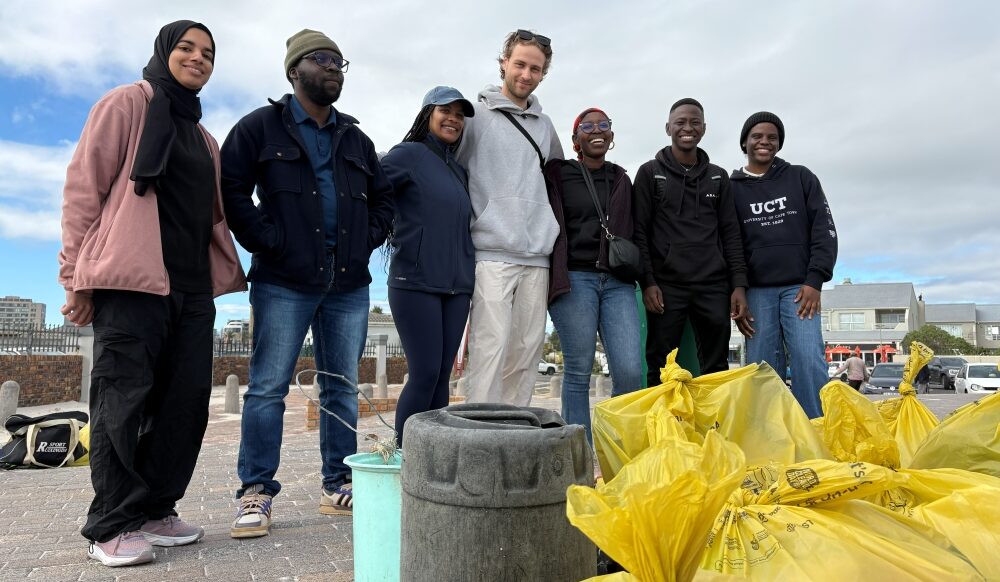
Some of my favourite days were at beach cleanups with the Hotlane Organization and others. Small actions don’t solve the whole crisis, but they build the community that eventually does. There is something humbling about spending a morning to pick bottle caps, plastic wrappers and many other waste out of the sand. You can read all the reports you want about plastic pollution, but filling bag after bag and disposing of it the right way is the first step to preserving the beauty of our oceans.
Through the Hotlane Organization, I also got the chance to meet students at the Nguzo Saba Institute, as well as join them for a day trip at the Kirstenbosch Botanical Garden. Being able to learn about their pollination project and the greening of open spaces in Khayelitsha with the help of robotics was incredibly eye-opening for me.
It’s a fascinating approach to learning skills like programming, robotics, planting, seeding, and more while also creating a positive long-term impact in the community. Donating trees so they could learn the planting and growing process, while also benefiting from a greener schoolyard, was the least I could do to enhance their learning experience.

Durban and the Fair Finance School
The Fair Finance School in Durban was a turning point for me. For two reasons.
First, I got to hear real life stories of local people affected by atmospheric pollution from big polluters. How it translates to health and respiratory issues, as well as creating the narrative for who really carries the debt?
Why do the countries that contributed least to the problem so often end up with the hardest conditions to access funding? These questions don’t come up much in atmospheric modelling, but they’re at the heart of whether solutions actually reach the people who need them.
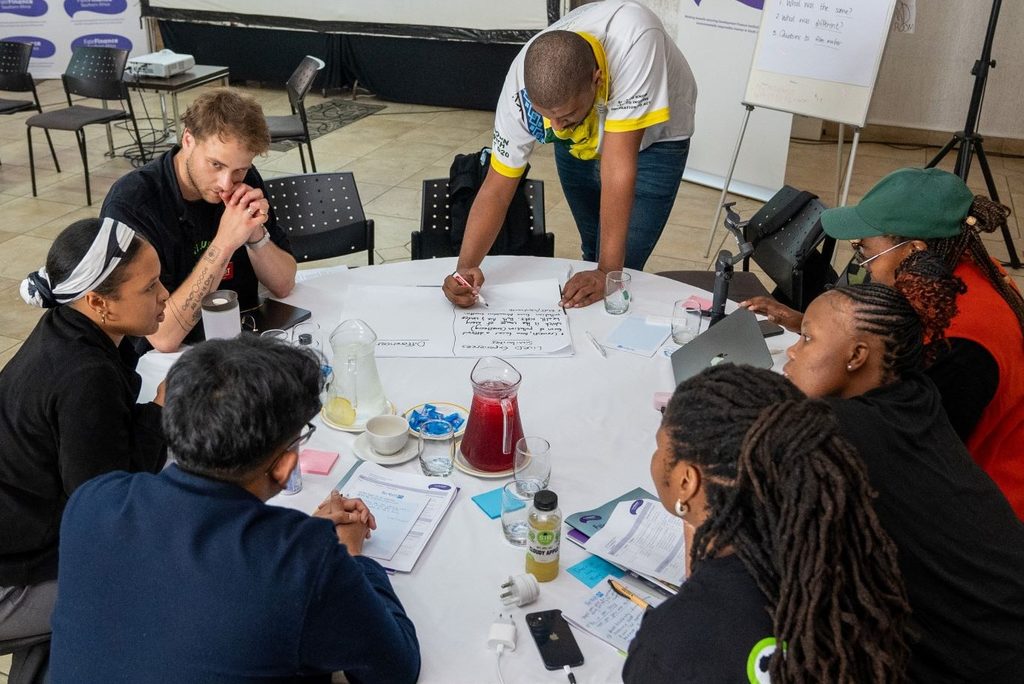
Second, it was the first time I met the team in person. After months of online calls and group chats, finally putting faces to names felt wonderful. There’s a different kind of energy when you’re in a room together, sharing meals, debating late into the evening, and laughing about the little things. I left Durban feeling like I was part of something, not just attending something.
Borders & belonging and guided visit of the Slave Lodge in Cape Town
The Borders and Belonging session, together with our visit to the Slave Lodge in Cape Town, was the most emotionally heavy part of my journey and also one of the most important.
Walking through the Slave Lodge, you’re confronted with a history of people being uprooted, displaced and stripped of their home and dignity. Connecting that history to today’s conversations about climate migration was sobering. Climate change is already pushing people from their homes, and the question of who gets to belong, and where, is going to become one of the defining issues of this century.
It reminded me that climate justice isn’t a side topic. It’s the whole point. You can’t separate the environmental crisis from questions of history, inequality and human dignity.
My biggest takeaways
South Africa and each person I got to meet, shifted my vision of climate change and its impacts. Sometimes the only power people have is to speak. Stories do make a change, and shared experiences are powerful when amplified. Enduring an everyday problem in your community takes courage, but sharing your story to create meaningful steps toward a better future for all is a lot more courageous.
Community is a climate solution. And climate justice is social justice.
Start where you are. Whether it’s a beach cleanup, a conversation with a friend, a story you tell a stranger or a research project, every contribution counts. Just keep in mind that climate change is affecting everyone, this means that the solution is everyone’s responsibility.
As a young researcher, I’m used to thinking that if the evidence is clear enough, people will act upon the problem and look for creative solutions. The data speaks for itself, right? Not quite. I’ve started paying more attention to how I talk about my research. Instead of opening with numbers, I try to start with something people can relate to.
Small actions don’t solve the whole crisis, but they build the community that eventually does. I’m leaving with a much bigger picture of what it means to fight for a liveable future for all and a whole network of people I’m proud to be fighting alongside.
Here’s to what comes next & until next time!
Thank you, ACRP!
#QEScholars